Under Construction

Details
3*
0*
1*
0*
0 Forum
Plant Care
Members can create lists of plants to manage your garden, get plant care information sent to you,
and connect to other gardeners.It's free and easy, SIGN IN or JOIN NOW and get started right away!
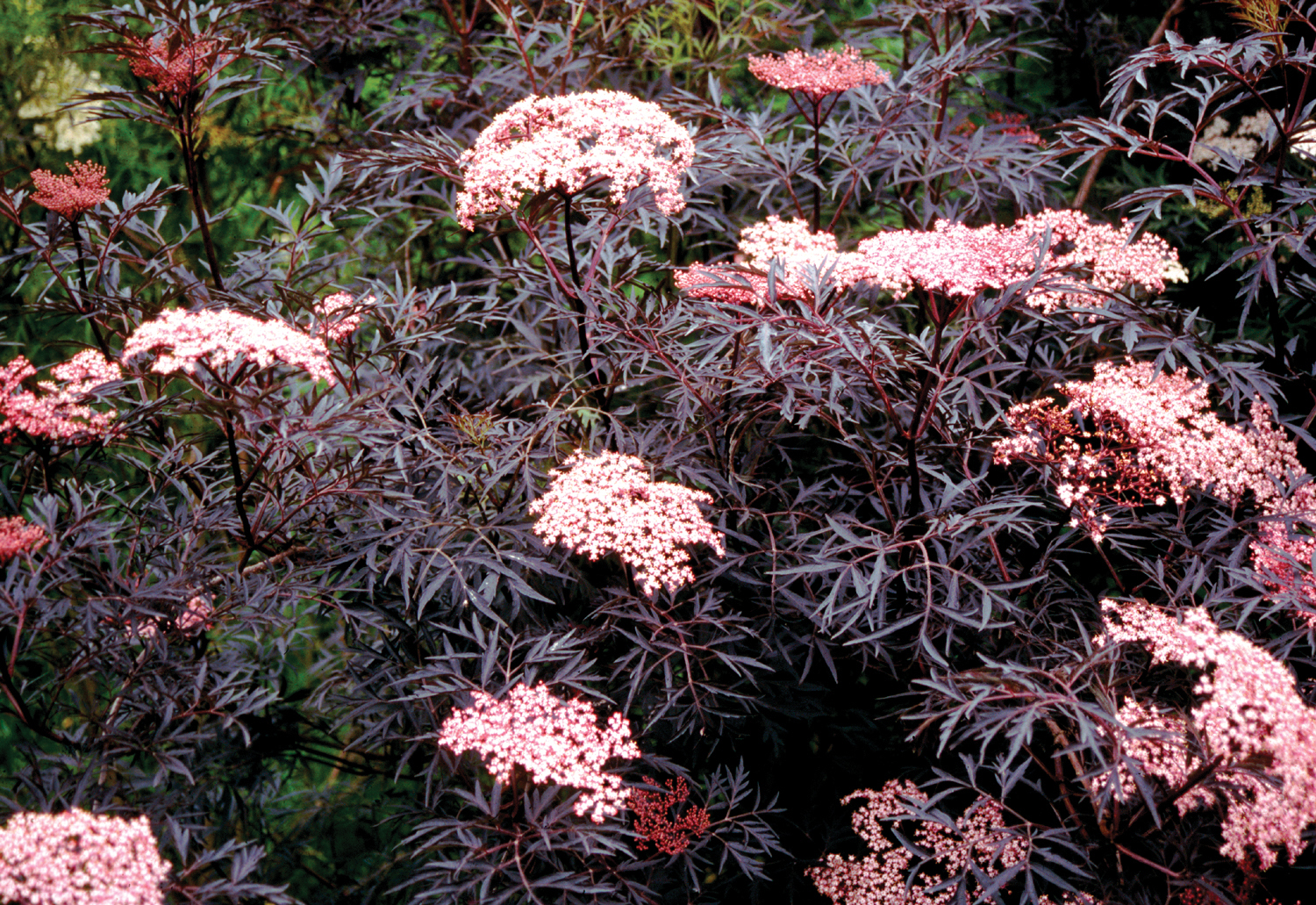
Sambucus nigra 'Eva'
Black Lace Elderberry
Plant Care Instructions
Below are Monthly Plant Care Instructions for this plant. You can get these sent directly to your "My Plant Care" page each month. Do this for any plant in your garden to create a complete calendar of what to do you each month in YOUR garden.
- Figure out what Climate Zone you're in ( find your Climate Zone Here ). Make sure the plant care reminders are from your Climate Zone!
- View the available CARE INSTRUCTIONS by clicking on View button and decide which set of instructions you like.
- Click the Use to have the instructions sent directly to your "My Plant Care" page.
- Review your "My Plant Care" to see what you should be doing that month in YOUR garden for YOUR plants.
For full instructions on using this feature go here.
| Member | Plant Care Instructions | Is Indoor Plant? |
Sunset Zones | USDA Zones |
|---|---|---|---|---|
| PW ColorChoice ViewUse | BLACK LACE™ is a stunning development in Elderberry breeding. Its intense purple-black foliage is finely cut giving it an effect similar to that of Japanese maple. Indeed, since it is extremely durable and adaptable, some designers are using it in place of the more sensitive Acer varieties. This deer resistant shrub beholds contrasting creamy pink flowers against dark purple leaves in spring. They are followed by blackish red fall berries which can be harvested for making elderberry wine and jam, or left on the plant to attract birds and other wildlife. BLACK LACE™ is very cold hardy and easy to grow, and adaptable to most sites. Full sun is needed for the best color. It can be used as a dramatic accent plant, planted en masse for a trouble free high hedge, or incorporated into a mixed or perennial border. Left alone it will reach up to 8 feet in height, but BLACK LACE™ can also be pruned back each year to fit into more formal settings. A word of caution, according to the Humane Society of American Sambucus leaves, bark, roots, and buds can be toxic to pets. This means that the plants are generally identified as having the capability for producing a toxic reaction. | No | 4a, 4b, 5a, 5b, 6a, 6b, 7a, 7b |